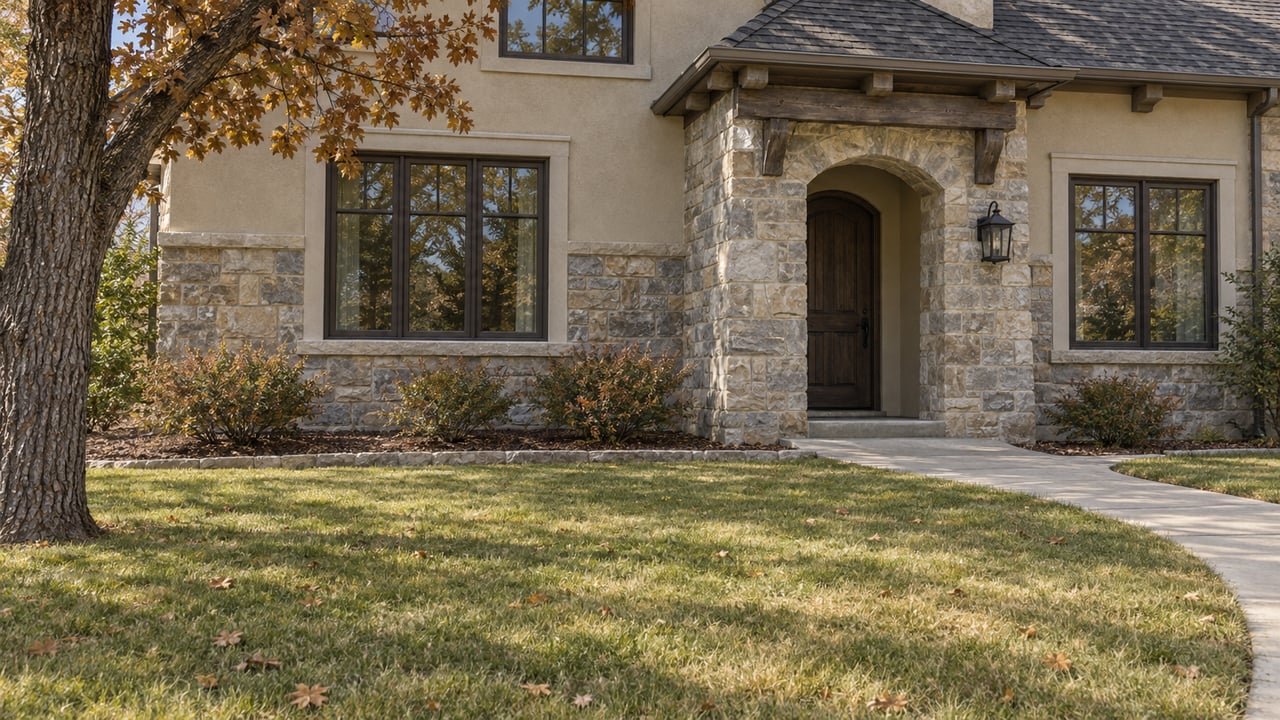
Whether you can water your lawn in Centennial this winter is a decision the city doesn't make. The City of Centennial says plainly that it does not provide water or sewer service. It sends residents to an address-based Property Search to find out who does.
The answer matters more this fall than it has in a long time. On October 1, 2026, several of the districts serving Centennial homes stopped allowing lawn watering at the same moment. Some wrote their own version of the rule and set their own fines. Others follow Denver Water's rules by contract. Two homes a few blocks apart can sit under different rules, different penalty schedules and different water bills, all with a Centennial address.
A Dozen Utilities Behind One City Name
The city's water and sanitation district page lists twelve providers serving Centennial residents:
- Arapahoe County Water & Wastewater Authority, or ACWWA
- Arapahoe Estates Water District
- Castlewood Water & Sanitation District
- Denver Water
- East Cherry Creek Valley Water & Sanitation District, or ECCV
- East Valley Metro District
- Havana Water & Sanitation District
- South Arapahoe Sanitation District
- South Englewood Sanitation District 1
- South-East Englewood Water District
- Southgate Water & Sanitation District
- Willows Water District
Stormwater is a separate matter. It's handled by the Southeast Metro Stormwater Authority.
Some of these districts make their own water decisions. Others are tied to Denver Water by contract. Willows Water District says Denver Water is its source and that Willows customers must follow Denver Water's restrictions. South-East Englewood Water District supplies its residents through a Total Service Contract with Denver Water. Southgate's news page has been reposting Denver Water's notices, including its October 12 supply update and its late-September warning about fines. So a large part of Centennial is effectively living under Denver Water's drought decisions, even though many residents never see the Denver Water name on a bill.
Same Ban, Different Fine Print
Here's how the rules compare for the districts that have posted their fall rules:
| Provider | Lawn watering now | What's still allowed | Posted penalties |
|---|---|---|---|
| Denver Water | Lawn watering and all spray irrigation banned since Oct. 1 | Hand-held hose with automatic shutoff nozzle, or low-volume non-spray irrigation like drip, for trees, shrubs and plants | Single-family homes: $500 first violation, $1,000 second, then $1,000 plus water shutoff |
| ECCV | All grass watering banned since Oct. 1, including hand and spot watering | Drip or soaker irrigation for trees, shrubs and gardens on assigned days; hand watering up to one hour per day | Warning, then $100, $250, $500 and $1,000; shutoff on a sixth offense |
| Willows | Follows Denver Water's Oct. 1 lawn and spray-irrigation ban | Non-spray watering of plants | Willows' water-waste schedule lists a warning, then $50, then $100, with possible service suspension |
| ACWWA | Stage 3 schedule: two days a week since June 15 | Hand watering trees, shrubs, flowers and vegetables any time | Violations can bring added charges or conditions of service |
The biggest difference is how fast the fines climb. A Denver Water single-family customer caught watering grass faces $500 on the first violation. Denver Water says it mailed postcards to every property as the first notice and warning. An ECCV customer gets a warning first, and the fines don't reach $500 until the fourth offense. ECCV is stricter about what counts as lawn watering, though. Under ECCV's October rules, even spot-watering a dry patch of grass by hand breaks the ban.
ACWWA customers have a different problem. The district's Stage 3 residential notice sets watering on Wednesday and Saturday for odd-numbered addresses and Thursday and Sunday for even-numbered ones. It allows no watering at all on Monday, Tuesday or Friday, and none between 10 a.m. and 6 p.m. The calendar attached to that notice ends in September, so check ACWWA's current notice before you assume anything about late fall. Castlewood, Havana, East Valley Metro and Arapahoe Estates customers should also go straight to their own district.
These are summaries of each provider's posted rules. They're general information, not legal advice, and your own district's current notice is the version that counts.
Why the Ban Runs Into Spring
Most Front Range watering limits end when the irrigation season does. This one is built to last longer, and Denver Water's October 12 supply update explains why. In Denver Water's collection area, the 2025-26 snowpack peaked more than a month early and at the lowest levels in the past 40 years. The South Platte River Basin peaked March 17, 2026, at 42% of normal, the lowest peak on record. The Colorado River Basin peaked March 18 at 58% of normal. As of October 12, Denver Water's reservoirs were 67% full. The usual level for that time of year is 90%.
That gap is why the ban has no end date. In its October 12 supply update, Denver Water said:
"That means sprinklers need to remain off in spring of 2027, pending an official resolution from the Board of Water Commissioners."
If you're served by Denver Water or one of the districts tied to it, don't plan on turning the system back on for April. ECCV, which runs its own supply, also says its supply was below normal after a sustained 2026 drought. Its no-grass rule stays in place "until further notice."
Your Trees Are the Exception, and Winter Is When They Need It
Every district that has posted rules still allows some way to water trees and shrubs. That matters, because a dry winter is hard on established trees, and nothing in these bans asks you to let them go. Denver Water allows trees, shrubs and other plants to be watered on any day by hand-held hose with an automatic shutoff nozzle, or with low-volume non-spray irrigation such as drip.
For dry stretches between October and April, Denver Water's tree care guide gives a simple routine:
- Water once or twice a month during dry periods.
- Use about 10 gallons for each inch of trunk diameter.
- Water only when the temperature is above 40°F.
- Skip it when there's snow on the ground.
CSU Extension's fall and winter watering guidance adds one detail about timing. It recommends watering around midday, so the water soaks in before temperatures drop overnight. CSU's advice is general horticulture, though. It doesn't override your district's restrictions. ECCV customers, for example, can hand water for up to an hour a day but must keep drip and soaker irrigation to their assigned days.
The Bill Follows the Boundary Too
The same district line that sets your watering rules also sets what you pay. Denver Water customers have paid a temporary drought charge since May, applied to use above the first tier. It's $1.10 per 1,000 gallons in Tier 2 and $2.20 in Tier 3, and it runs through April 30, 2027 unless the board changes it. Tier 1 use is exempt. In September, the Denver Gazette reported on a staff proposal for 2027 rates that would bring in about 6% more revenue. The Gazette said the board was expected to vote on that rate increase in October, and that customers outside Denver would see increases that vary with how their service is provided. A separate staff proposal would raise the drought charges to $1.40 and $2.80 per 1,000 gallons.
ECCV structures its bill differently. Every residential customer pays a $10 monthly administrative fee, a $30 Sustainable Water Assurance Fee and a $45.50 sewer fee. That's $85.50 a month before any water use at all. Since May 1, 2026, drought pricing has raised ECCV's two top usage tiers. The 19,000 to 28,000 gallon tier went from $12.10 to $13.31 per 1,000 gallons, and use above that went from $14.55 to $16.73. With lawns off, most households should be using less water, so the fixed fees will make up a larger share of the winter bill.
Southgate customers have a date coming up. The district posted a notice that its boards will consider changes to water and sewer fees, rates and charges at a public meeting at 4 p.m. on November 10, 2026. The notice doesn't list proposed amounts.
If You're Already Thinking About Next Year's Yard
A lawn that stays brown through spring makes replacing some turf look more appealing, but the 2026 money is gone. Resource Central says its 2026 Lawn Replacement program is full. It has opened a 2027 interest list, and its general rules require at least 200 square feet and at least 50% waterwise plants. Denver Water says its 2026 turf-removal discounts of up to $750 are fully allocated, and it hasn't decided whether they'll return in 2027. ECCV's posted 2026 rebates cover hardware. They include up to $100 toward a qualifying smart controller, up to $50 for a wireless rain sensor, and per-unit rebates on qualifying sprinkler bodies and nozzles.
Before any of that, look up your address on the city's Property Search so you know which of the twelve providers serves your home. That one answer tells you which ban applies, which fine schedule applies and which rate meeting affects your bill.
If you're planning a spring sale and wondering how a dormant lawn and a drought-year yard will affect buyers, Michael Gordon is glad to walk through it with you, one district at a time. Start with Get Your Instant Home Valuation, and we'll talk through what next season will look like at your address.